 ColmarTour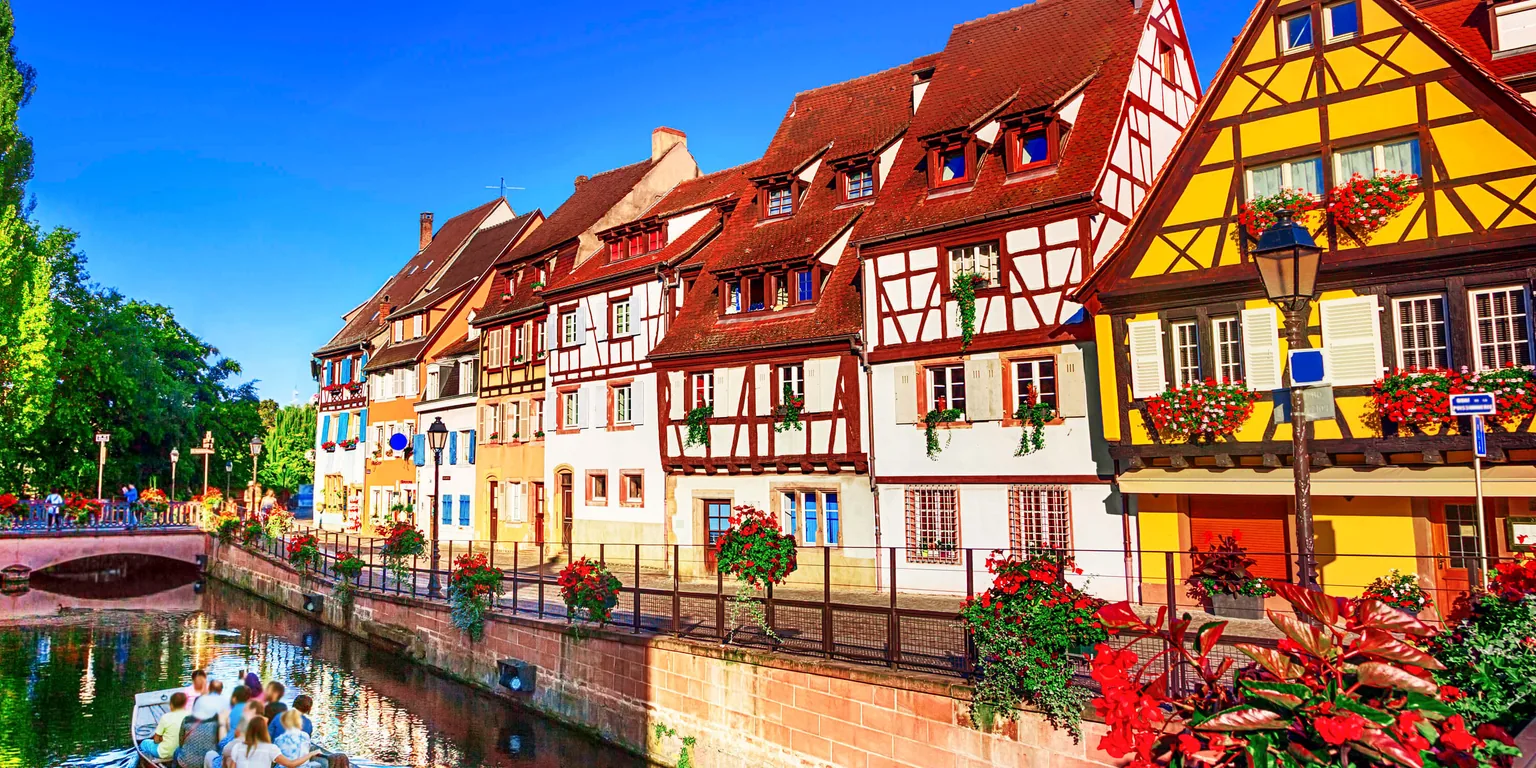
Colmar: the old town, Little Venice and the Christmas markets
Everything worth knowing before you go — what's free, what costs money, when to come, and how to see the best of it in an afternoon.
Hear the guide before you go
One minute of the opening track. This is the voice you'll have in your ear for the whole walk.
What is this tour?
A self-guided audio walk through Colmar's old town — 27 stops, about an hour and a half, at whatever pace you feel like.
It starts at Parc du Champ de Mars, winds through the painted houses and the market squares, and finishes in Little Venice. You'll hear why Colmar minted its own money, which house inspired a Studio Ghibli film, and what the Star of David on a brewery actually means. No group to keep up with, no umbrella to follow.
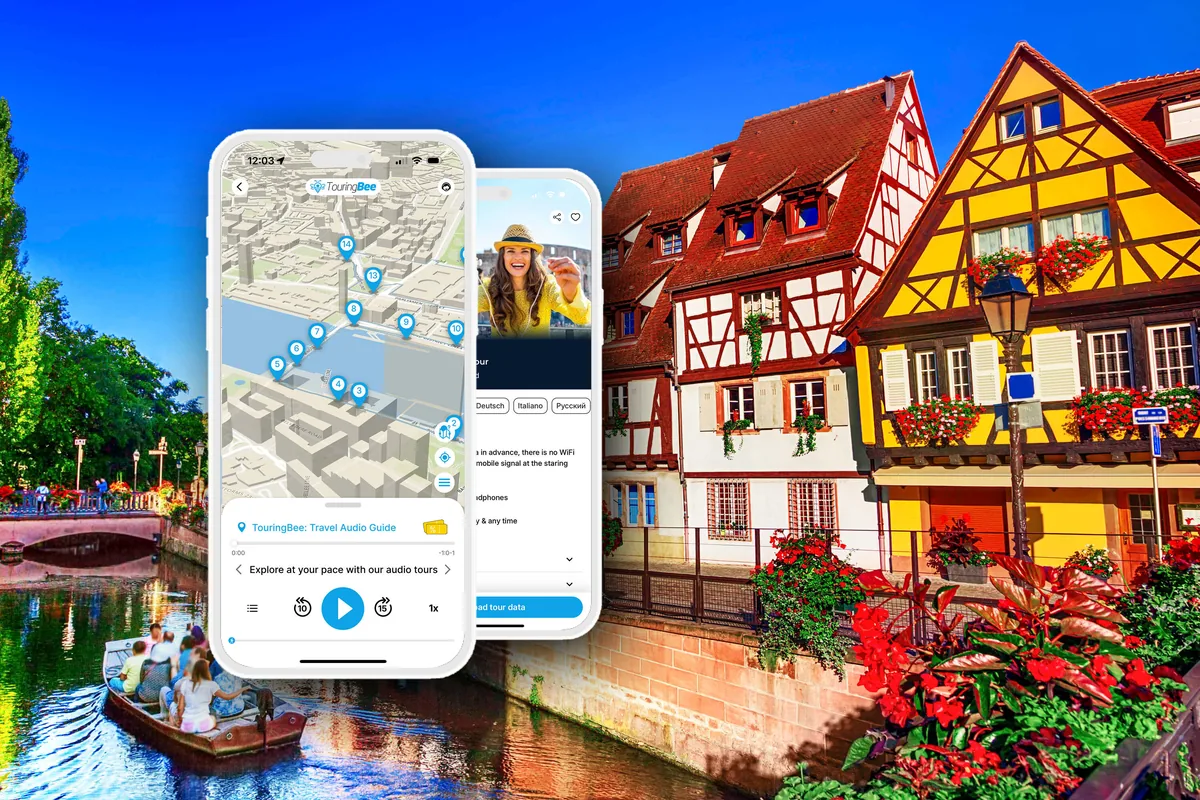
Colmar Old Town Walking Tour
€9.99 · one payment, no subscription
- 27 audio stops narrated by a professional historian
- 100% offline once downloaded — no data needed in Colmar
- Offline GPS map shows where you are; you start each track yourself at the spot
- English, French, German, Italian and Polish
- iOS and Android · 1 year of access
- About 1.5 hours, entirely at your own pace
Why visit Colmar?
Because it survived. Two world wars rolled over Alsace and somehow left Colmar's centre almost untouched — which is why the old town still looks like an illustration rather than a reconstruction. The painted half-timbered houses aren't a heritage-district pastiche. They're the originals, lived in, with laundry in the windows.
It's also small. You can walk the whole historic centre in ninety minutes, which makes it one of the rare French towns you can genuinely see in a day. Our 27-stop audio walk is built around exactly that: a loop that hits everything worth stopping for and ends where you'd want to end anyway, on the water in Little Venice.
The story in five minutes
In 1226 Colmar became a free imperial city — answerable to the emperor and nobody else. No duke, no bishop, no local lord taking a cut. It minted its own currency. The bishop over in Strasbourg took this badly, and in 1262 sent troops. Colmar's council president, Johannes Roesselmann, died defending the walls; his body was smuggled home in a barrel so the besiegers couldn't desecrate it. He's the bronze figure on the fountain today — sculpted, like half of Colmar's public art, by a local boy called Bartholdi.
That would be Frédéric Auguste Bartholdi. Born here in 1834, on the street now named after him, in the house that's now his museum. He went on to build the Statue of Liberty. Colmar has a scale replica at the northern entrance to town, which surprises a lot of American visitors who came for the gingerbread houses.
The independence habit outlasted the empire. Colmar joined the Décapole, a league of Alsatian towns that banded together against anyone trying to tax them — a structure that looks a lot like Switzerland's, and that tells you most of what you need to know about the Alsatian temperament. French rule, German rule, French again, German again, French again: the town changed nationality four times in seventy-five years and kept ordering beer with its wine list throughout.
Still deciding where to base yourself?
Colmar works better than Strasbourg as a base for the wine villages — it's 30 minutes closer to all of them and beds cost less in December. We compare both properly in Colmar vs Strasbourg.
What you'll discover on the walk
Six of the twenty-seven stops.
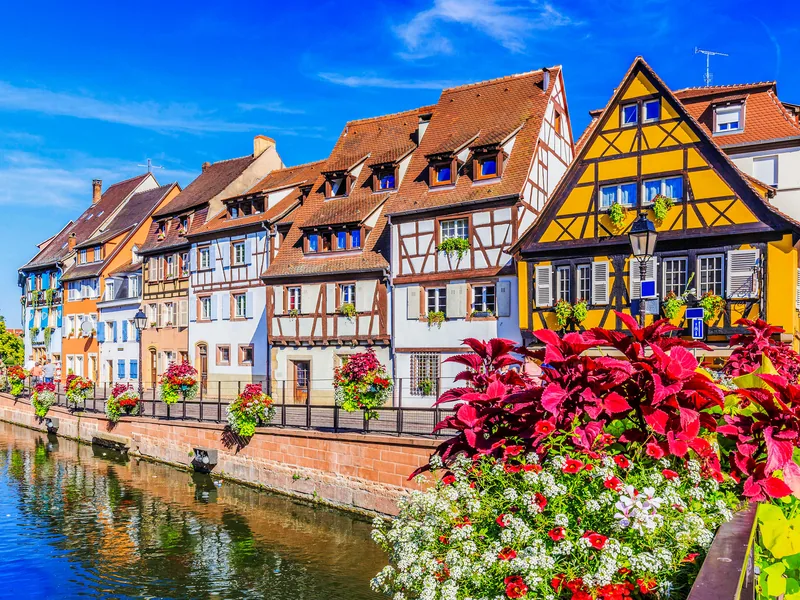
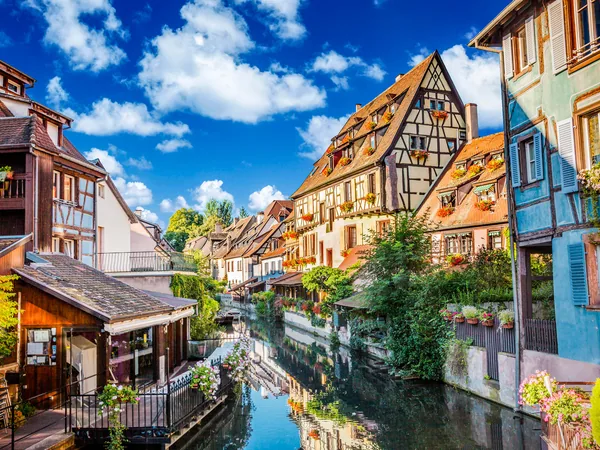
La Petite Venise
The canal quarter the postcards are made of. Flat-bottomed boats, geraniums, and the tanners' houses with their open top floors — built that way to dry hides.
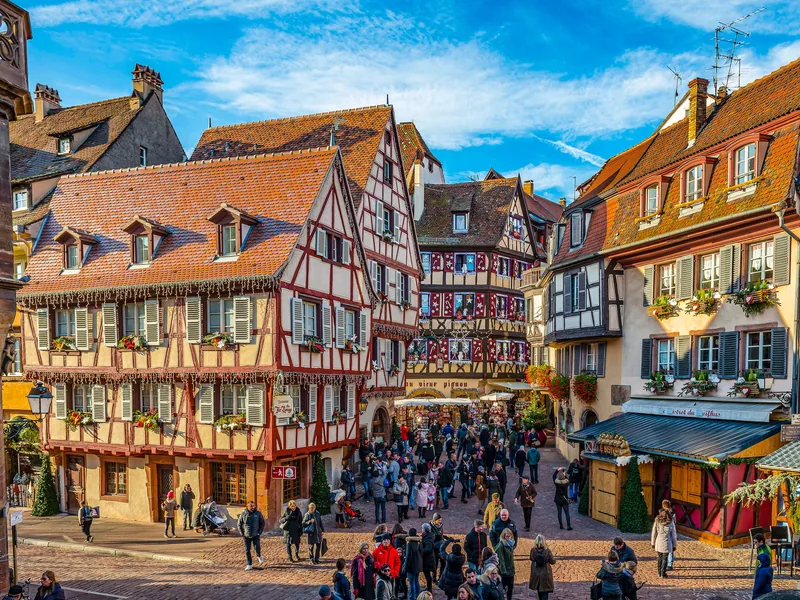
Maison Pfister & the painted houses
1537, and still the most photographed façade in Alsace. Next door, the Maison des Têtes wears 105 carved faces.
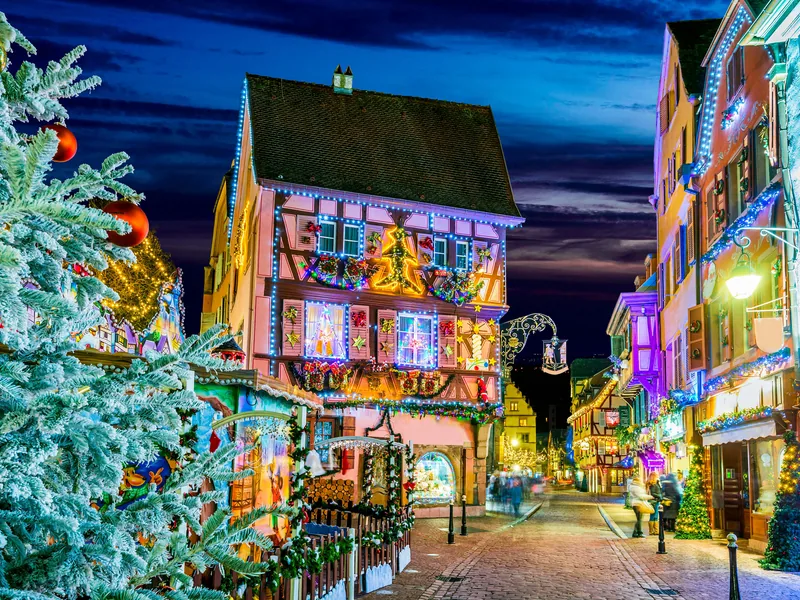
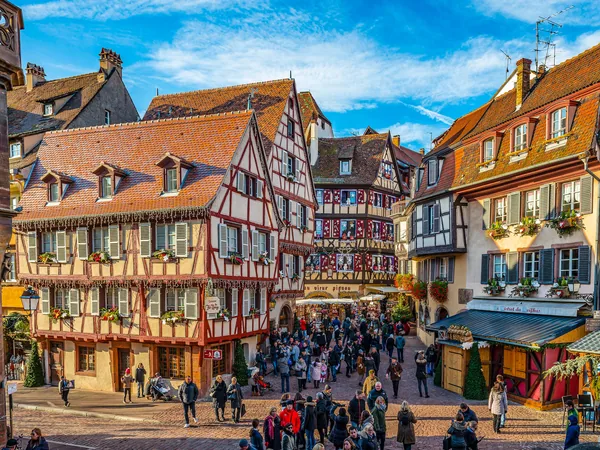
The Christmas markets
Six separate markets across the old town, 23 November to 29 December. The walk ends inside one of them in December.
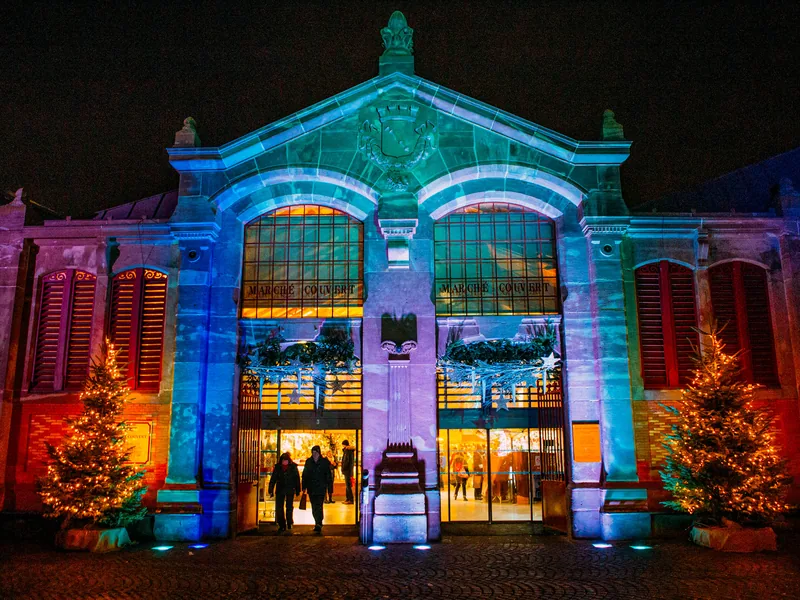
The Marché Couvert
An 1865 iron-and-brick hall that's still a working market. Cheese, charcuterie, Alsatian wine by the glass at 10am, nobody judging.
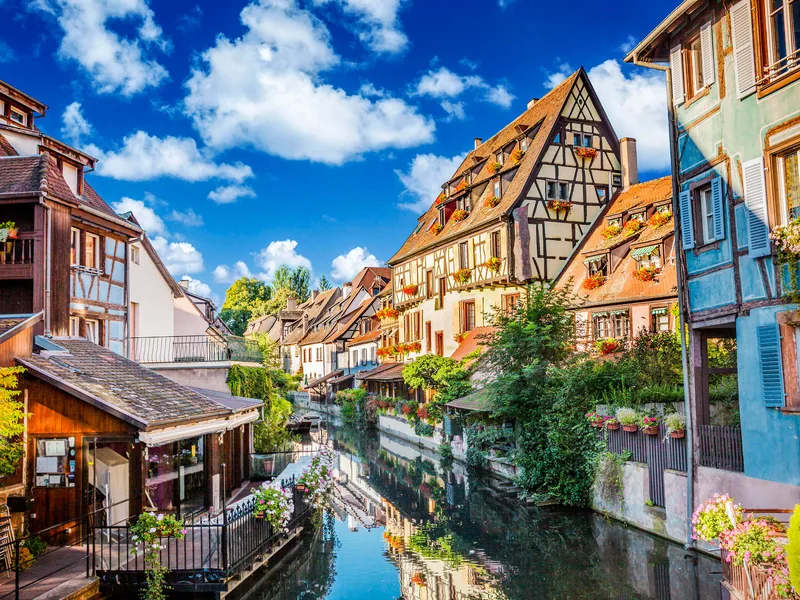
The tanners' quarter
Wooden top floors left open to dry hides, and the Quai de la Poissonnerie behind them. A short walk on to the Koïfhus, where the Décapole met and goods were taxed.
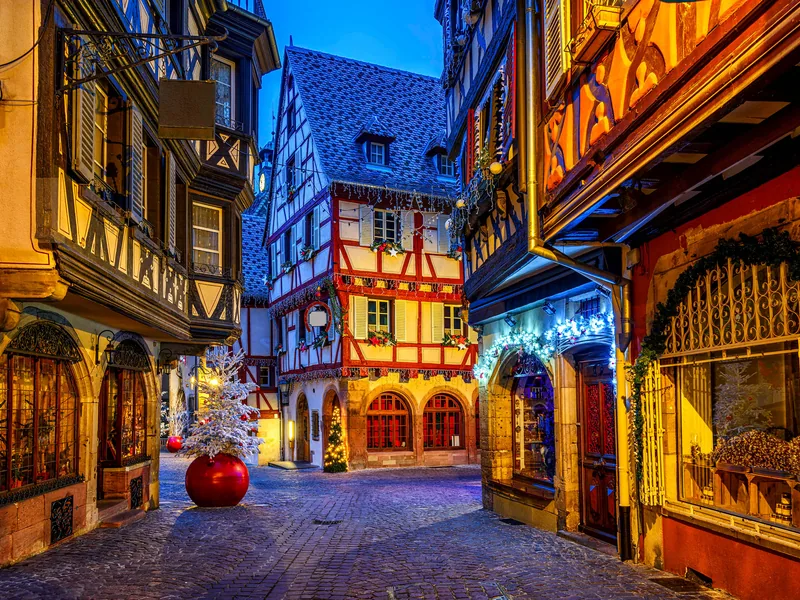
Rue des Marchands at dusk
Bartholdi was born at number 30. Somewhere along here is also the smallest house in Colmar — barely wider than its own door, for reasons involving medieval property tax.
How the audio tour works
Buy the guide
One payment, instant access. No subscription. Your activation email arrives within a few minutes.
Download the app
Get TouringBee on iOS or Android, activate, and download the Colmar tour over Wi-Fi before you set off.
Start at Champ de Mars
Open the guide when you arrive, follow the offline map, and start each track yourself when you reach the stop.
Pause and resume
Stop for a coffee, take a detour, come back tomorrow. The tour waits. Access lasts a year.
Visiting Colmar: the practical part
Almost everything that makes Colmar worth the trip costs nothing. The old town, the canals, the market squares, the façades — all free, all open, all the time. What you pay for is the inside of things: the Unterlinden, the Bartholdi, a boat on the canal, and whatever you drink.
The one ticket worth buying in advance
The Musée Unterlinden holds the Isenheim Altarpiece — a folding polyptych that is, without much competition, the most extraordinary painting in eastern France. €14, closed Tuesdays, last entry 17:30. In December the queue is real; book ahead.
Getting here by train
Colmar sits on the Paris–Strasbourg–Basel line, and the station is a ten-minute walk from the old town. Paris Gare de l'Est to Colmar is about 2h20 direct; from Strasbourg it's half an hour and trains run all day. Booking early is where the savings are.
Driving the Wine Route
Eguisheim, Riquewihr, Kaysersberg and Turckheim are all inside a 20-minute radius. Buses exist but they're sparse; a car turns a frustrating day into an easy one. (Turckheim is the exception — it has a station nine minutes from Colmar.)
Book tickets & guided tours
If you'd rather have a person than an app for part of the trip, these are the operators worth looking at.
GetYourGuide
Wine Route day trips, Christmas market tours, Eguisheim and Riquewihr runs, boat rides in Little Venice.
Tiqets
Museum entry and attraction tickets, including the Unterlinden. Skip the December queue.
Booking.com
Beds in the old town, and car hire for the wine villages. December fills up by September.
More audio tours by TouringBee
Doing more of Alsace, or heading on somewhere else?
Strasbourg
33 stops from the cathedral through Petite France. Thirty minutes up the line.
Paris
The Louvre, the Musée d'Orsay, Montmartre and Père-Lachaise, each as its own walk.
All tours
Cities across Europe and beyond, same format: offline, self-paced, one payment.
Plan your visit
Colmar Christmas markets
Six markets, what's at each one, and how to do them without spending the day in a queue.
Colmar walking tour: the 27-stop route
The full route, stop by stop, with the map and roughly how long each leg takes.
One day in Colmar
A realistic itinerary built around the Unterlinden being shut on Tuesdays.
The Alsace Wine Route from Colmar
Which villages are worth it, in what order, and whether you actually need a car.
Best time to visit
Markets, harvest, crowds and the shoulder weeks nobody tells you about.
Where to stay
Old town versus the edges, and why December bookings need to happen in September.
Frequently asked questions
Is Colmar worth visiting?
Yes, with one caveat: it's small. You can see the historic centre properly in half a day, so build the rest of the trip around it — the wine villages, Strasbourg, or a slow afternoon on the canal. As a standalone three-day destination it will run out before you do.
How much does it cost to visit Colmar?
The old town is free — streets, canals, squares, façades, all of it. You pay for the Musée Unterlinden (€14), the Musée Bartholdi, a boat ride in Little Venice, and food. A full day including one museum and lunch runs roughly €40–60 per person.
When are the Colmar Christmas markets in 2026?
23 November to 29 December 2026, across six separate markets in the old town. Weekends in December are extremely busy; a weekday morning is a different experience entirely.
How do I get to Colmar from Paris?
Direct TGV from Paris Gare de l'Est, about 2h20. From Strasbourg it's roughly 30 minutes, from Basel about 45. The station is a ten-minute walk from the old town, so no onward transport is needed.
Do I need a car for the Alsace Wine Route?
It helps a great deal. Eguisheim, Riquewihr and Kaysersberg are all within 20 minutes of Colmar by road but poorly served by bus. Turckheim is the exception — nine minutes by train. Otherwise, hire a car or take a day tour.
Does the audio guide work without internet?
Yes. Download it over Wi-Fi before you set out and it runs completely offline — no data, no roaming. The offline GPS map shows where you are; you start each track yourself when you reach the stop.
What languages is the Colmar audio guide available in?
English, French, German, Italian and Polish. You choose the language when you buy.
How long does the audio walk take?
About an hour and a half of walking and listening, covering 27 stops. In practice most people take two to three hours because they stop for coffee, photographs, or a boat.
About the author

Eugene has lived in France for sixteen years, worked as a guide, and visited more than 300 French towns and villages. He founded the paris10.travel content network and writes the TouringBee audio tours. This site is his Colmar notebook, cleaned up.
Prices, hours and dates are checked against official sources before publication and re-checked each season. If something here is out of date, tell him.
Walk Colmar with the stories in your ear
27 stops, an hour and a half, entirely at your own pace. One payment, works offline, yours for a year.
Some links on this page are affiliate links to Tiqets, GetYourGuide, Booking.com and SNCF. If you book through them we may earn a commission at no extra cost to you. The TouringBee audio guide is our own product. See our Affiliate Disclosure.